 Skip-the-line available
 When to visit Pernštejn Castle
The castle only opens for around seven months of the year, and the crowd pattern inside that window is easy to read once you know it.
Pernštejn Castle isn't a year-round attraction, and its guided tour runs on a hard visitor cap rather than open-ended admission. Here's how the season and the crowds actually break down, and how to pick a date around both, based on the castle's own published visiting regulations and tour schedule.
A seven-month season, not a year-round one
The single most important fact for planning a visit is that Pernštejn Castle closes completely over winter. The current visiting regulations close the castle from early November to early April — for the 2025/26 turn of the season that meant 3 November 2025 through to 3 April 2026, with the castle reopening for the new season on 4 April 2026 and running through to 2 November 2026. Outside those dates the castle is shut to the public entirely, whatever else your itinerary allows for and however far you've travelled to reach South Moravia.
That's a longer closure than some better-known Czech castles observe, and it catches out travellers who assume a state-administered monument runs on the same near-year-round schedule as a major national museum in a capital city. If you're building a winter or early-spring trip around Brno and the Bohemian-Moravian Highlands, Pernštejn simply won't be open for it — worth checking against your dates before you commit any part of an itinerary to including it.
Everything else in this guide assumes a visit inside that open season, since there is no alternative way to see the interior once the season has ended; the courtyards and grounds are the only part of the site that might be glimpsed from outside the closure period, and even that access is limited and not the same as a proper visit.
The reopening date can shift by a few days year to year depending on the castle's own maintenance schedule and any restoration work in progress, so it's worth checking the current season dates close to your travel date rather than relying purely on the previous year's calendar.
Travellers who've built a wider Central European trip around a fixed set of dates should treat Pernštejn's season dates as a hard constraint rather than a detail to confirm later — unlike an indoor museum, there's no fallback option here if your dates land outside the open window.
The busiest months: July and August
Like most castles within easy striking distance of Brno, Pernštejn sees its heaviest footfall in July and August, when Czech school holidays overlap with the wider European summer travel season. Coach parties, family groups and independent travellers all converge on the same handful of weeks, and weekend departures on Route I are the most likely tours of the day to reach their 35-person cap first, sometimes well before the tour's scheduled start time.
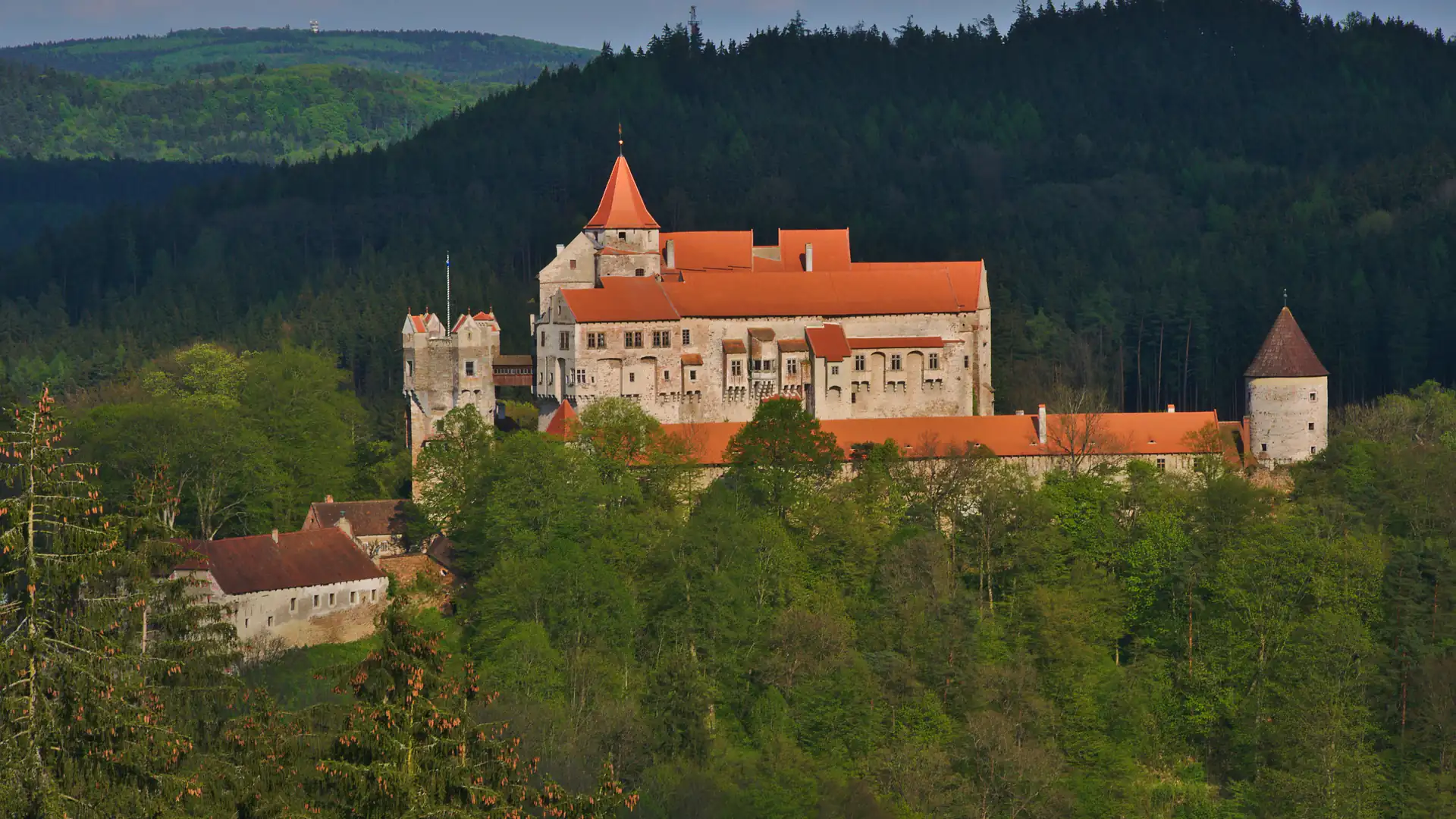
None of that makes a summer visit a poor idea — the castle's setting, high above the Svratka valley, is arguably at its most photogenic in full summer green, and the long daylight hours give more flexibility over which departure to choose across a longer opening window than the shoulder seasons allow. It just means that booking your date and time ahead of arrival matters considerably more in July and August than it would at a quieter site with open-ended, uncapped admission.
A confirmed slot removes the one real risk of high season: turning up at the ticket window to find the day's remaining Route I departures already sold out, and having to either wait for a much later time slot or abandon the visit altogether and drive back down the hill disappointed. For a castle that only opens for around seven months a year, that's a genuinely frustrating way to lose a day of a trip.
If you can only travel in peak season, a weekday visit — even a Tuesday or Wednesday rather than the more obvious Saturday — spreads the same overall summer crowd across more of the week and noticeably improves your odds of an easy booking and a more relaxed tour once you're inside.
Coach groups also tend to cluster around particular mid-morning departures rather than spreading evenly through the day, so a first or last departure on a summer date can feel considerably calmer than the numbers for the day as a whole might suggest.
The quieter shoulder weeks
April, May, June, and September through to early-to-mid October are noticeably calmer than high summer. The castle operates the same days of the week and the guided tour covers exactly the same rooms — there's no reduced or abbreviated version of Route I outside peak season — so a shoulder-season visit isn't a lesser one in content, just an easier one to move through at a comfortable pace.
The barbican, the courtyards and the ancient yew tree by the gate are all considerably easier to enjoy without a queue building up behind you, and photographs of the castle's dramatic approach are cleaner without a coach party filling the frame in every shot. Guides also tend to have a little more room to answer individual questions when groups aren't running consistently at full capacity, which can make for a richer visit than the numbers alone suggest.
Late October into early November brings a reduced, weekend-only schedule as the season winds down toward its early-November closure, with shorter opening windows to match the shorter daylight hours and the colder weather closing in on the exposed hilltop site. If a weekday visit matters to your plans, aim for September or earlier rather than the final fortnight before the season ends and the schedule contracts.
Spring brings its own reward in the form of fresh green cover on the wooded approach and around the castle gardens below the rock, while autumn colours the same slopes in the weeks before the season's close — either is a genuinely attractive time to make the climb, arguably more so than the deep green of a crowded August.
Shoulder-season visitors also tend to find the castle's own staff, from the ticket window to the guides themselves, have more time to engage with individual questions than during the fast-turnaround pace of a fully booked July weekend.
Weather on the rock
Pernštejn sits high on an exposed spur above the Svratka valley, fully open to the wind and weather in a way a valley-floor sight isn't, and the steep walk up from the car park is genuinely different in mild spring sunshine than in high summer heat or a cold, wet April downpour. Spring and early autumn tend to offer the most comfortable climbing conditions for the approach on foot, without the extremes of either season.
The interior of the castle stays cool year-round regardless of the season outside, in the way thick medieval and Renaissance stone always does — walking from a warm July afternoon into the Knights' Hall or the old library can feel like a small climate change in itself, so a light layer is worth carrying even in the height of summer, tucked into a bag for the tour itself.
Whatever the season, Moravian weather can turn quickly on an exposed hilltop site like this one; a light waterproof is sensible insurance for the uphill walk regardless of the forecast when you set out from Brno, since a clear morning in the city doesn't guarantee the same conditions 40 km northwest and considerably higher up.
Underfoot conditions matter too: the path up from the car park can turn slick after rain, and the historic floors inside the castle itself are original, uneven stone rather than a modern, level surface — one more reason sturdy, grippy shoes serve a Pernštejn visit better than anything you'd choose for a city day out.
Layering is the simplest solution to the gap between an exposed, sun-warmed climb and a cool stone interior: a jacket you can tie round your waist for the walk up and put back on inside the castle covers most of what the day's weather can throw at you.
Picking a date around the 35-person cap
Because Route I only runs as a guided group tour capped at 35 people per departure, the practical question for a booking isn't only "which season" but "which departure on which day." Early tours soon after opening and the last departure of the day tend to hold spare places longer than the late-morning and early-afternoon slots most visitors default to, since those middle-of-the-day windows are where coach groups and independent travellers overlap most heavily.
Whatever date and time you settle on, the castle needs at least two days' notice to confirm a guided-tour place — this isn't a same-day, walk-up booking system in the way some larger, unguided museums operate — so treat arranging your visit ahead of time as part of the plan rather than an afterthought, especially for a July or August weekend when demand is at its highest across the whole season.
If your dates are flexible at all, shifting a summer visit even a few days off a Saturday or Sunday, or choosing early September over late July, is usually enough on its own to noticeably ease the crowding, without sacrificing anything in the tour itself or the rooms it covers.
For travellers building a wider South Moravia or Highlands itinerary, it's often worth fixing the Pernštejn date first and building the rest of the trip around it, precisely because the guided-tour cap and the two-day lead time make it the least flexible booking in an otherwise easy-going regional trip.
Once your date and time are confirmed, the rest of the day's planning becomes considerably easier — you know exactly when you need to be at the car park, and can build the drive from Brno, the walk up, and any onward plans around that one fixed point.
Frequently asked
What is the best month to visit Pernštejn Castle?
May, June and September offer the best balance of open-season weather and lighter crowds. July and August are busiest; the castle is closed entirely from early November to early April.
Is Pernštejn Castle open in winter?
No. It closes completely from early November to early April each year — for 2025/26, 3 November to 3 April, reopening 4 April 2026 for the new season.
Do I need to book ahead in summer?
It's strongly advised. Route I tours are capped at 35 visitors per departure, and July and August weekends are the most likely to fill. Bookings also need at least two days' notice to arrange.
Is the castle busier on weekends?
Yes, generally, especially through the summer months when day-trippers from Brno and further afield add to the usual weekend traffic. Weekday visits in the shoulder months are the calmest option overall.